Know the species
Identification, habitat and behavior at a glance, based on statewide guidance from the Michigan DNR.
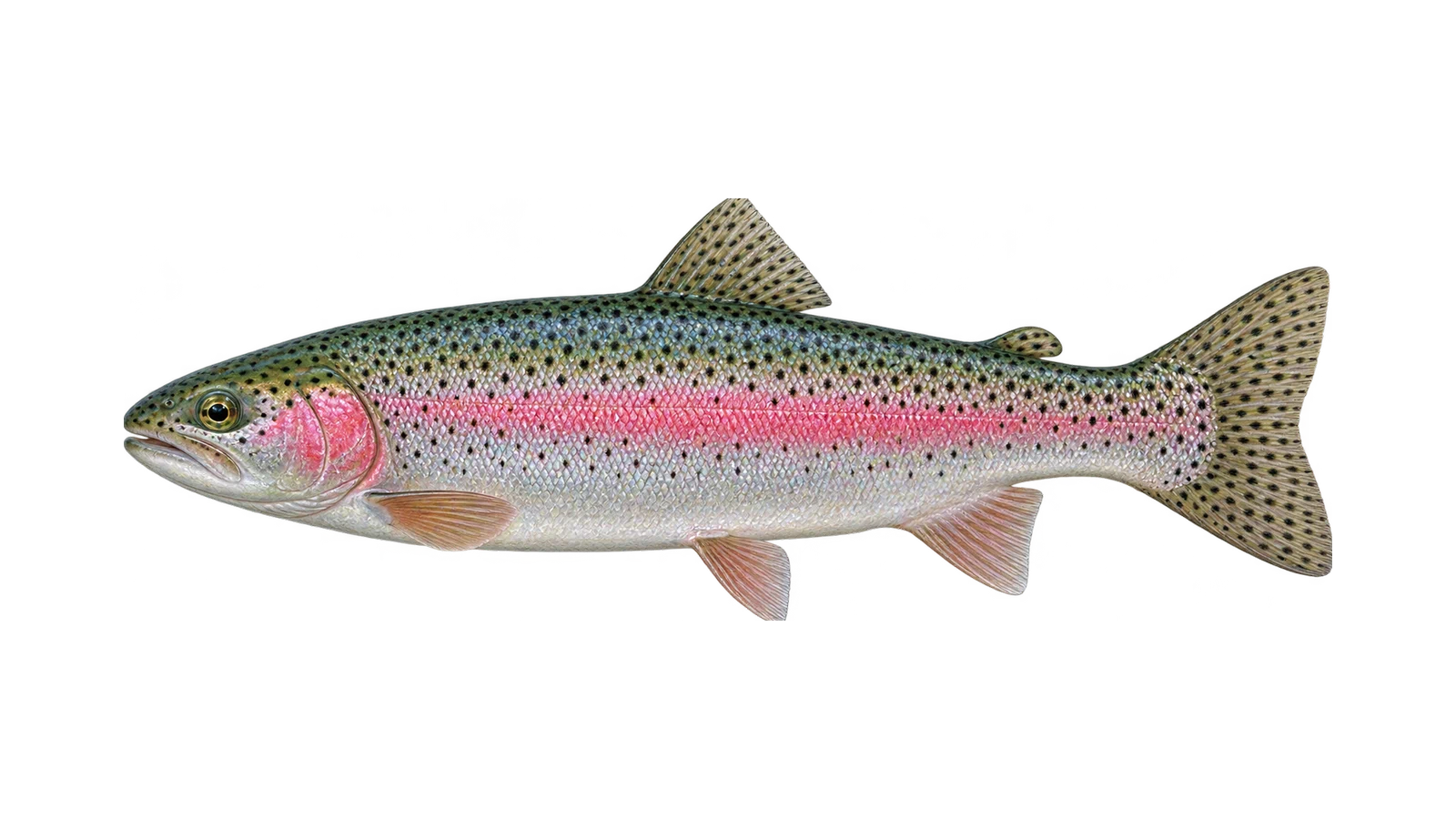
How to identify Rainbow Trout
Rainbow trout commonly show dark spots across the back and fins, with a pink-to-reddish lateral band that can vary with life stage and environment.
Habitat and environment
Rainbow trout generally depend on suitable temperatures and oxygen levels. Michigan fishery opportunities can include streams, stocked inland waters and Great Lakes-related fisheries.
Food and seasonal behavior
They feed on insects, other invertebrates and sometimes smaller fish. Their movement and feeding vary by water temperature and life stage.
Where this fish fits into Michigan's waters
Rainbow trout are part of Michigan's fisheries, including migratory steelhead forms. A statewide profile should not be interpreted as confirmation of stocking or a viable fishery at any individual lake.
From a species guide to the right water
Start with the Michigan DNR's Better Fishing Waters directory, which lists waterbodies alongside species recommended by fisheries management biologists. Confirm the county and full waterbody identity before linking any record to a LakeLocale lake. A historic recommendation is not a current population survey or guarantee of catch.
For current access, use the public boat ramps directory; for geographic context, explore Michigan lake locations or available official depth maps.