Know the species
Identification, habitat and behavior at a glance, based on statewide guidance from the Michigan DNR.
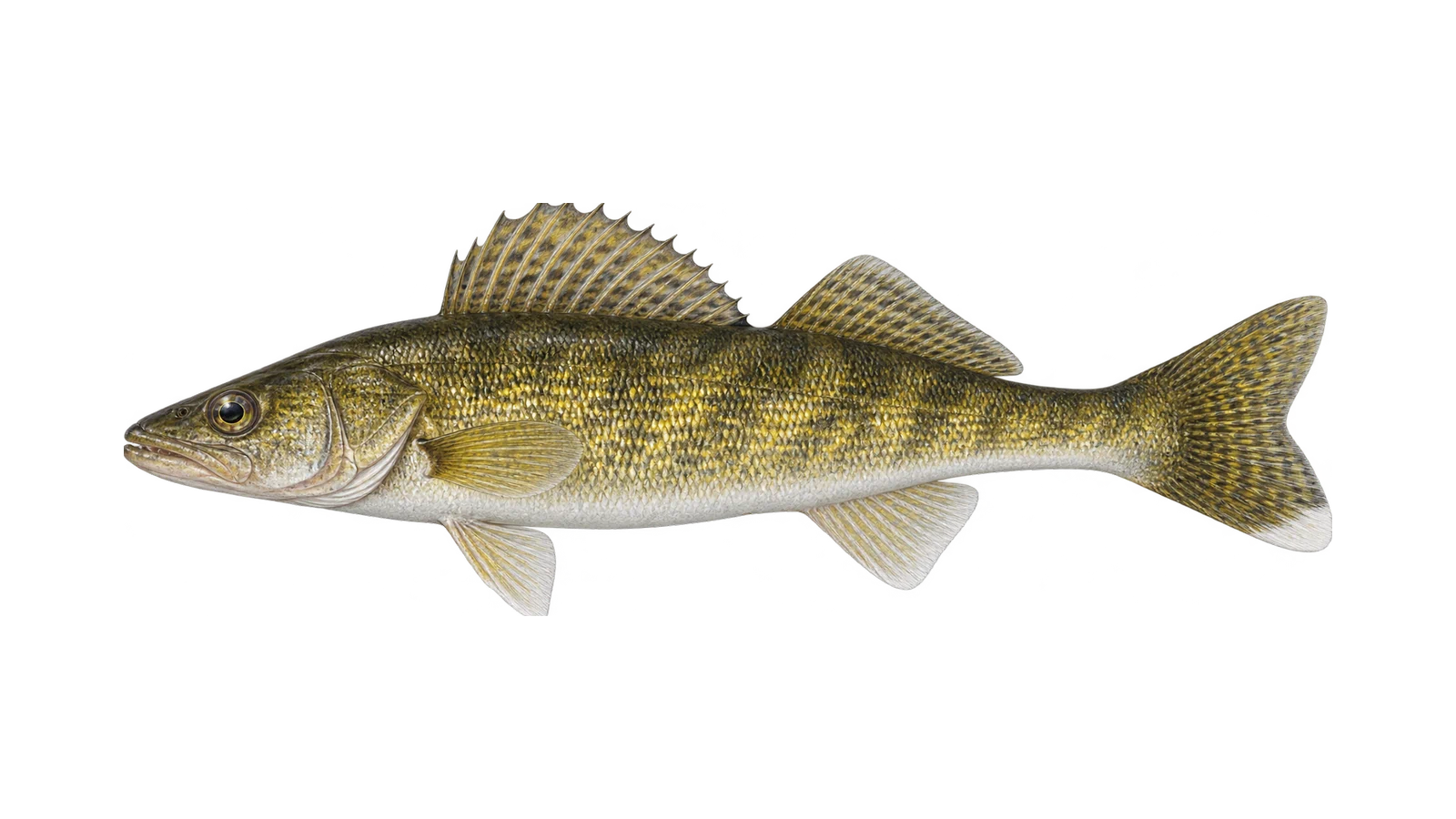
How to identify Walleye
Walleye have two separated dorsal fins, prominent canine-like teeth, reflective eyes and pale tips on parts of the lower tail and anal fins.
Habitat and environment
The DNR describes walleye using rocky spawning areas and a range of habitats and depths during the year. Water temperature and light influence fish movement, so a static lake map does not indicate where fish are currently located.
Food and seasonal behavior
Walleye feed on other fish and may be active at dawn, dusk and during low light. Their feeding and fishing patterns vary seasonally.
Where this fish fits into Michigan's waters
Michigan DNR provides walleye identification and fishery guidance. For a particular Michigan waterbody, use a named fisheries survey or official fishing-water listing rather than guessing from its depth map.
From a species guide to the right water
Start with the Michigan DNR's Better Fishing Waters directory, which lists waterbodies alongside species recommended by fisheries management biologists. Confirm the county and full waterbody identity before linking any record to a LakeLocale lake. A historic recommendation is not a current population survey or guarantee of catch.
For current access, use the public boat ramps directory; for geographic context, explore Michigan lake locations or available official depth maps.